
 English
  Español
  Deutsch
  Français
  Русcкий
 Parking lots in Spain
and their types
Spain has a wide range of parking lots, both paid and free. This variety allows every car owner to find the best solution for their needs.
Parking • Colored Zones • How to Pay • What to Do If Your Car Is TowedPaid parking lots, colored parking zones in Spain
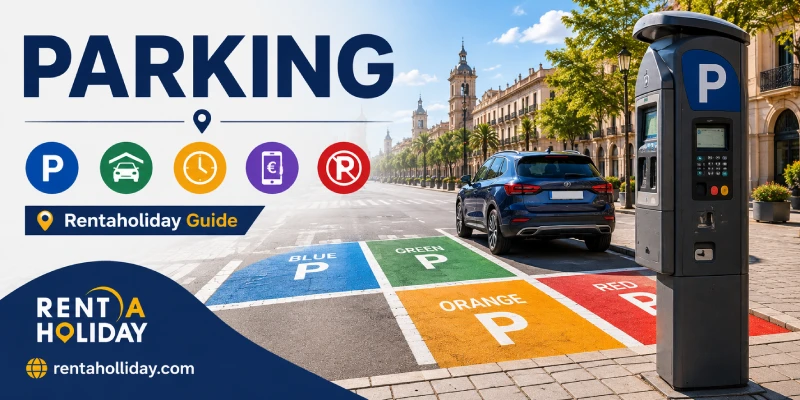
Paid parking lots provide additional services that can be useful when visiting cities, especially in central areas. They are usually located in convenient places and may offer services such as secure parking, video surveillance and convenient payment options. Thanks to this, drivers do not have to waste time and nerves searching for a free parking space. Parking fees vary depending on the region, location and demand, but paid parking is often one of the most convenient and fastest ways to find a place for your car.
Knowing the local parking rules is especially useful if you have rented a car at Alicante Airport.
Colored parking zones in Spain and what do they mean?
One of the main problems faced by drivers in any city around the world is the limited number of available parking spaces and extremely complicated parking rules. However, Spain has introduced an interesting and innovative solution to improve the situation - the use of colored parking zones.
Colored parking zones are areas on the road marked with a specific color and designated specifically for parking vehicles. This system was introduced to reduce pressure on busy parking areas and provide better traffic organization.
Spanish cities are actively implementing this system into their infrastructure. Each color indicates its own rules and parking time limits. If you are planning a trip to the capital of Catalonia, you can also check car hire at Barcelona Airport in advance and take the city's parking rules into account.
Blue Parking Zones
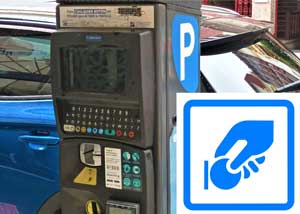 Zona Azul - parking spaces marked with a dashed blue line, with a time limit and payment required. As a rule, near such parking spaces you will find a sign showing a hand holding a coin and a parking meter.
 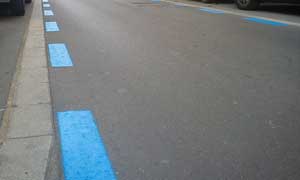 These zones are generally limited to a maximum of 2 hours, so carefully check the rules displayed on the parking meter itself. You will need to enter your vehicle registration number, after which the parking meter will automatically calculate the maximum parking time based on the amount you pay. Do not forget to take the ticket showing your vehicle registration number and the time until which you are allowed to remain in the space. The ticket should be placed under the windshield of your car on the dashboard, as these zones are regularly checked by specially appointed parking inspectors who verify that payment has been made and that the parking time has not expired. There is usually some flexibility for short delays in these parking areas, and being 10 - 15 minutes late is not always penalized, but it is still better not to rely on this. Also pay attention to other cars parked in the blue zone nearby and check whether they have parking tickets displayed. If not, go to the parking meter and check the schedule, as there may be restrictions, for example parking may be free at night or on public holidays and weekends.
Green and Orange Parking Zones
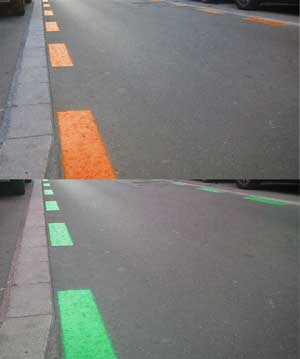 These zones are designated primarily for resident parking. Green and orange (sometimes appearing reddish) markings are generally located around or near residential complexes. Parking in these zones is not always completely prohibited for non-residents. As a rule, during the daytime from 08:00 to 20:00, non-residents may be allowed to leave their car there for no more than one hour, while at night these parking spaces are intended exclusively for residents of the residential complex they belong to. Therefore, avoid leaving your car in these parking zones unless you are staying somewhere nearby.
Colored parking zones in Spain are an excellent example of progressive ideas in urban planning and traffic management. This system helps solve parking problems, creates a more favorable environment for drivers and promotes more efficient use of parking spaces. Spain demonstrates that innovative and bold approaches can make parking more convenient and efficient for everyone.
This system of colored parking zones has a number of advantages. First, it provides drivers with a clearer understanding of parking rules, as each color indicates specific restrictions and requirements. Drivers can quickly determine which zone is suitable for their situation. Second, it improves the efficiency of parking space use and helps make the most of the available space. Finally, this approach helps reduce congestion in areas where parking spaces have always been particularly limited. If you are planning to travel around Spain by car, you can compare car hire at Madrid Airport options in advance.
White Zone - Free Parking in Spain
Despite all the convenience of paid parking, Spain also has many free parking areas. This is an ideal option for those who want to save money and do not mind exploring areas away from the main city centers. Free parking can often be found in areas further from the city center, on the outskirts or near shopping centers, where parking spaces are provided by businesses to attract customers. Naturally, such parking requires more time and patience, as you may need to spend some time looking for an available space, but you can save money on parking fees.
Where Parking Is Prohibited Completely in Spain?
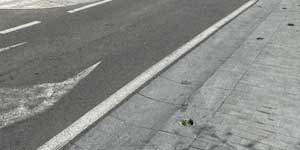 Avoid unfamiliar signs, lines, markings and warnings. Trying to guess the traffic rules instead of clearly understanding the Spanish parking regulations can lead to unwanted consequences, such as having your vehicle towed, followed by a significant fine and time spent recovering the car. In addition, if you have rented a car at Malaga Airport, you should clearly understand that fines and vehicle recovery are not covered by any type of insurance.
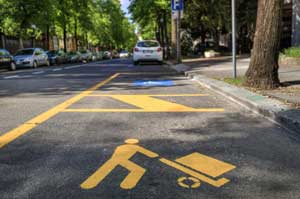 Thick yellow zigzag lines allow stopping but not parking. They are usually located near service points such as pharmacies and other facilities, as well as passenger drop-off areas in beach zones. Here you can safely stop to let passengers out near a hotel or on the beach, but you should not remain there any longer than necessary. You should then look for a designated parking space.
VADO signs (usually used to indicate entrances and exits from residential garage complexes) also prohibit parking in these areas.
Loading and unloading zones, no-parking signs and a solid thick white line along the curb are all indications that parking is prohibited in these locations.
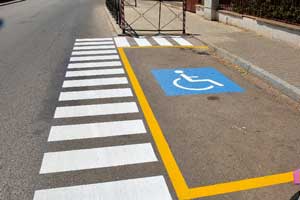 It is also worth noting that some cities in Spain offer special programs for certain groups of citizens, such as people with disabilities or elderly people. These programs provide them with free or discounted parking spaces to make everyday mobility easier.
Keeping up with the times - given the growing popularity of electric vehicles, most major cities in Spain have green parking spaces marked with a charging symbol. These are preferential parking spaces for electric vehicles, usually located next to a charging station.
If you are using a rental car and decide to visit major cities in Spain, we recommend using covered paid car parks to avoid minor damage to the vehicle. The cost ranges from around 18 - 22 euros per day, but if you book a hotel online, you can ask the hotel whether it has its own parking facilities or a loyalty program that allows you to park your car at a discounted rate.
Thus, whether you prefer the comfort and convenience of paid parking or consider saving money on parking a priority, Spain offers a variety of options for drivers. The choice is yours, depending on your lifestyle, needs and budget. If you are planning a trip to the island, you can also compare car hire at Palma de Mallorca Airport options in advance.
How to Pay for Parking in Spain?
Payment for parking in Spain depends on the specific city and type of parking zone. In most cases, you can pay for parking directly at a parking meter located near the parking spaces. Modern machines usually accept bank cards, while in some places you can also use cash or mobile apps.
Before making a payment, carefully check the information displayed on the parking meter: the operating hours of the paid zone, the maximum permitted parking time and available payment methods may differ even between neighboring areas. After payment, in some cases you need to take a paper ticket and place it under the car windshield so that the parking inspector can easily see the expiry time.
If parking is paid for through a mobile app, make sure that you have entered the correct vehicle registration number and parking duration. This is especially important when using a rental car in Spain, as the vehicle registration number may be different from the one you have used before.
Do not rely solely on the presence of a parking meter. Always check the road signs and information directly in the parking area, as the rules may allow free parking at certain times, on weekends or on public holidays.
When Is Parking in Spain Free?
Even in cities with a large number of paid parking areas, you can find periods and places where you are allowed to leave your car for free. However, the specific conditions depend on the city, district and type of parking zone.
In many cities, paid parking zones operate only during certain hours. Outside these hours, and sometimes on Sundays and public holidays, parking may be free. The exact schedule is always indicated on road signs or on an information board next to the parking meter.
Free parking spaces can also be found outside central areas, near some shopping centers, supermarkets and public facilities. However, you should carefully check any time restrictions: free parking does not always mean that you can leave your car there for the entire day.
If you are travelling around Spain in a rental car, it is especially important to check the local parking rules in each new city. Conditions that apply in one municipality do not necessarily apply in another.
What to Do If Your Rental Car Is Missing?
If you return to the place where you left your rental car and the car is no longer there, do not panic. In most cases, if you are sure that you left the car there, it was most likely towed because of incorrect parking.
Carefully inspect the place where the car was parked. In Spain, after a vehicle has been towed, a special sticker or notice is often left on the pavement near the place where the car was parked. This sticker usually shows the registration number of the towed vehicle and the address where it was taken. Therefore, before contacting the police or starting to search for the car throughout the city, carefully check the parking location.
If you find such a sticker, be sure to immediately inform the rental company. This is especially important when the vehicle is rented, as the rental company needs to know where its car is and what has happened to it.
You will then need to travel to the indicated address where the vehicle was taken. Usually, this is a special vehicle impound facility operated by the local Ayuntamiento (municipality). To collect the car, you will have to pay the fine for incorrect parking and the costs associated with towing and storing the vehicle.
After making the payment, be sure to keep all documents and receipts you receive. When returning the vehicle to the rental company, you should provide the documents confirming payment of the fine and the release of the vehicle from the municipal impound facility.
It is important to remember that if you are using a rental car, towing due to incorrect parking is not a standard insurance claim. Therefore, all costs associated with the fine, towing and vehicle storage will generally be the responsibility of the renter.
Parking in Spain may seem complicated because of the large number of different zones, road markings and local rules. However, if you carefully read the road signs, check the information on parking meters and take the applicable restrictions and operating hours into account, finding a suitable place for your car becomes much easier.
The main rule for drivers is not to rely only on the color of the road markings. Always pay attention to nearby signs and additional information, as these determine the specific parking conditions in that location.
If you are travelling around Spain by car, spending a little time learning the local parking rules can help you avoid fines, having your car towed and unnecessary expenses during your trip.